The Connected Databases
An interactive map and open dataset that link prisons, prisoners, martyrs, and testimonies into one connected record of the Israeli carceral system — built to be explored, cited, and reused.
What we're building
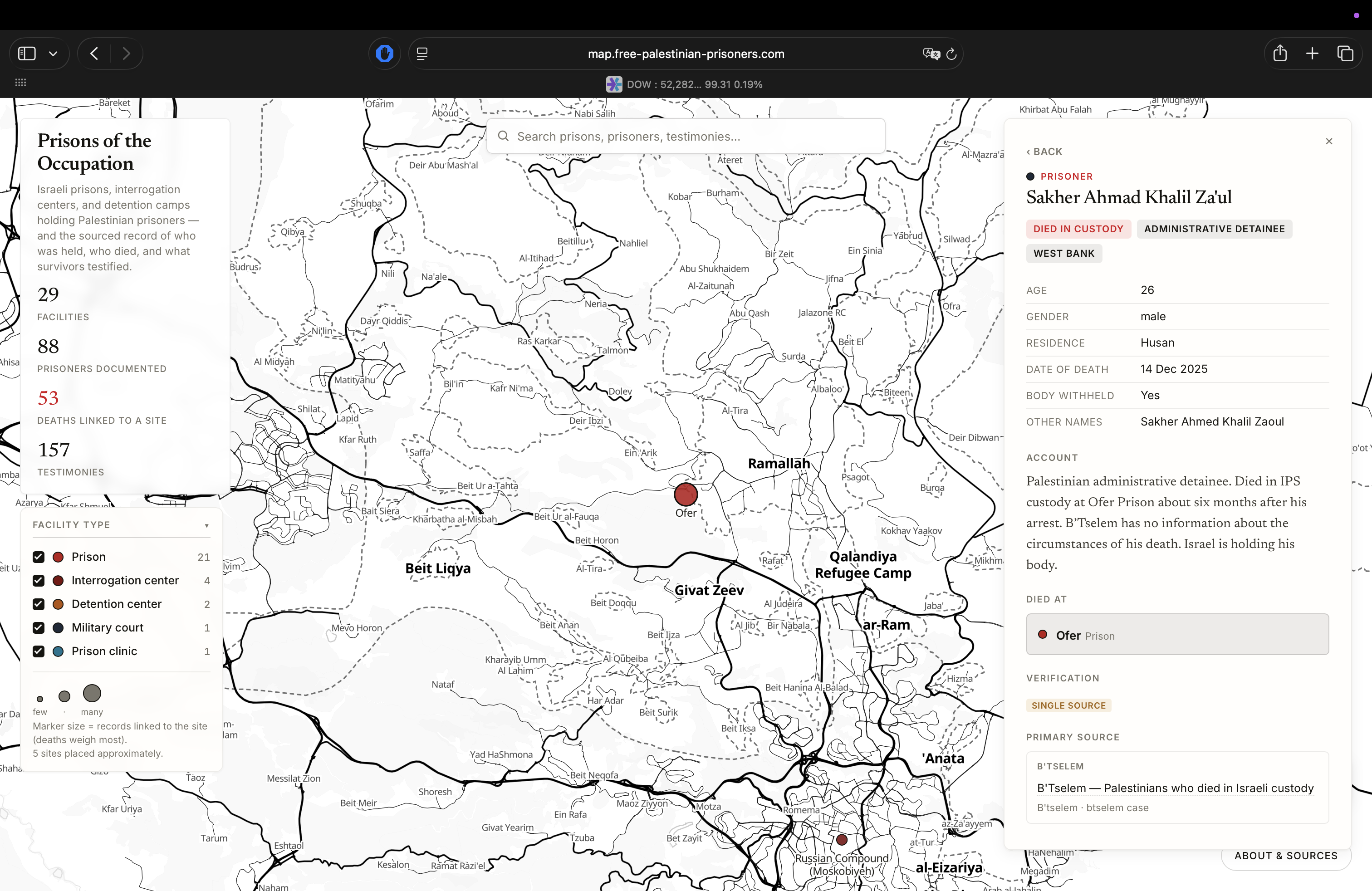
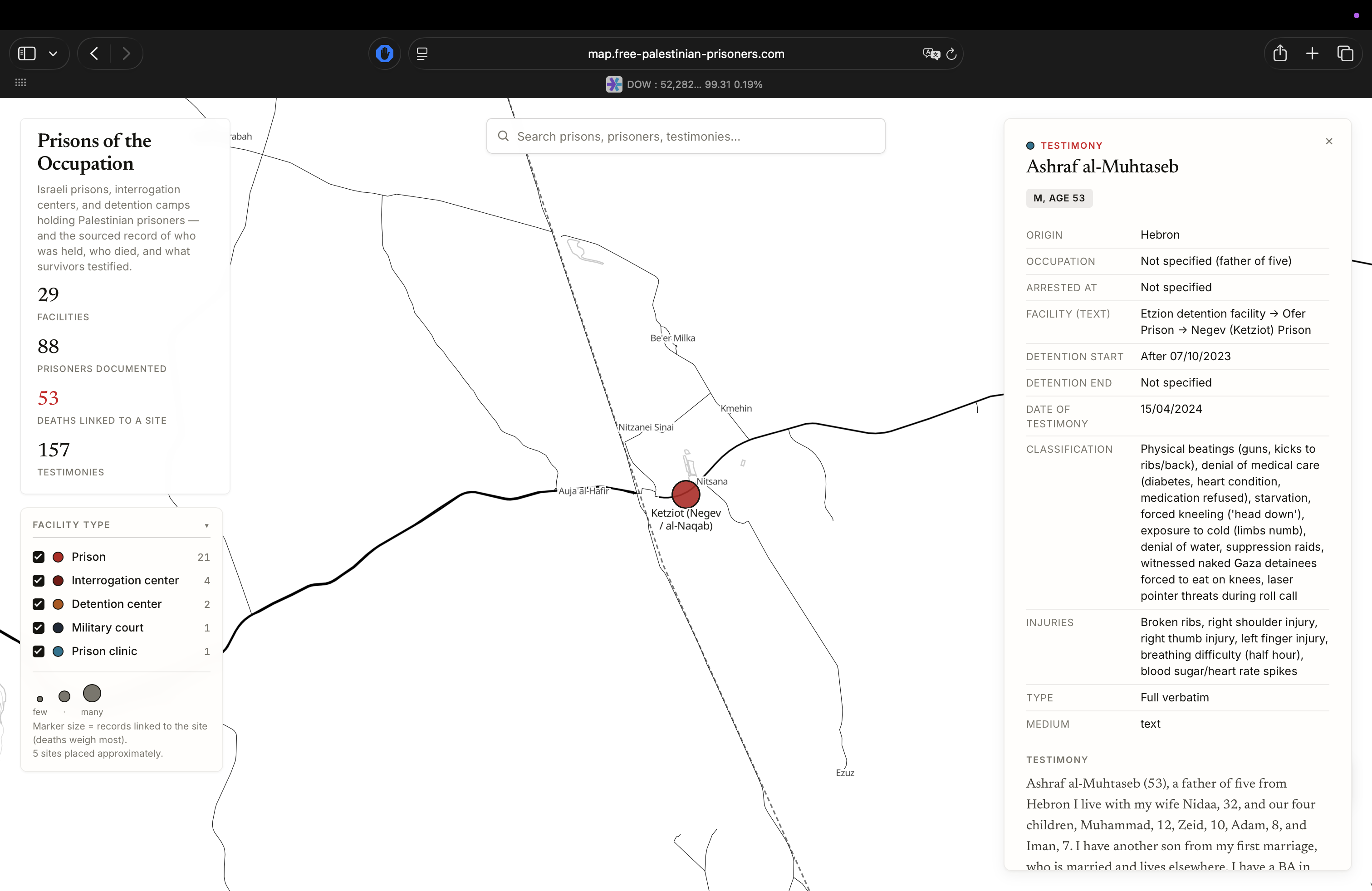
The campaign maintains four connected databases — prisons, living prisoners, martyrs, and testimonies — drawn from human-rights documentation and first-hand accounts. Each record is cross-linked by the detention facility it relates to, so the data tells a single, connected story rather than sitting in four separate spreadsheets.
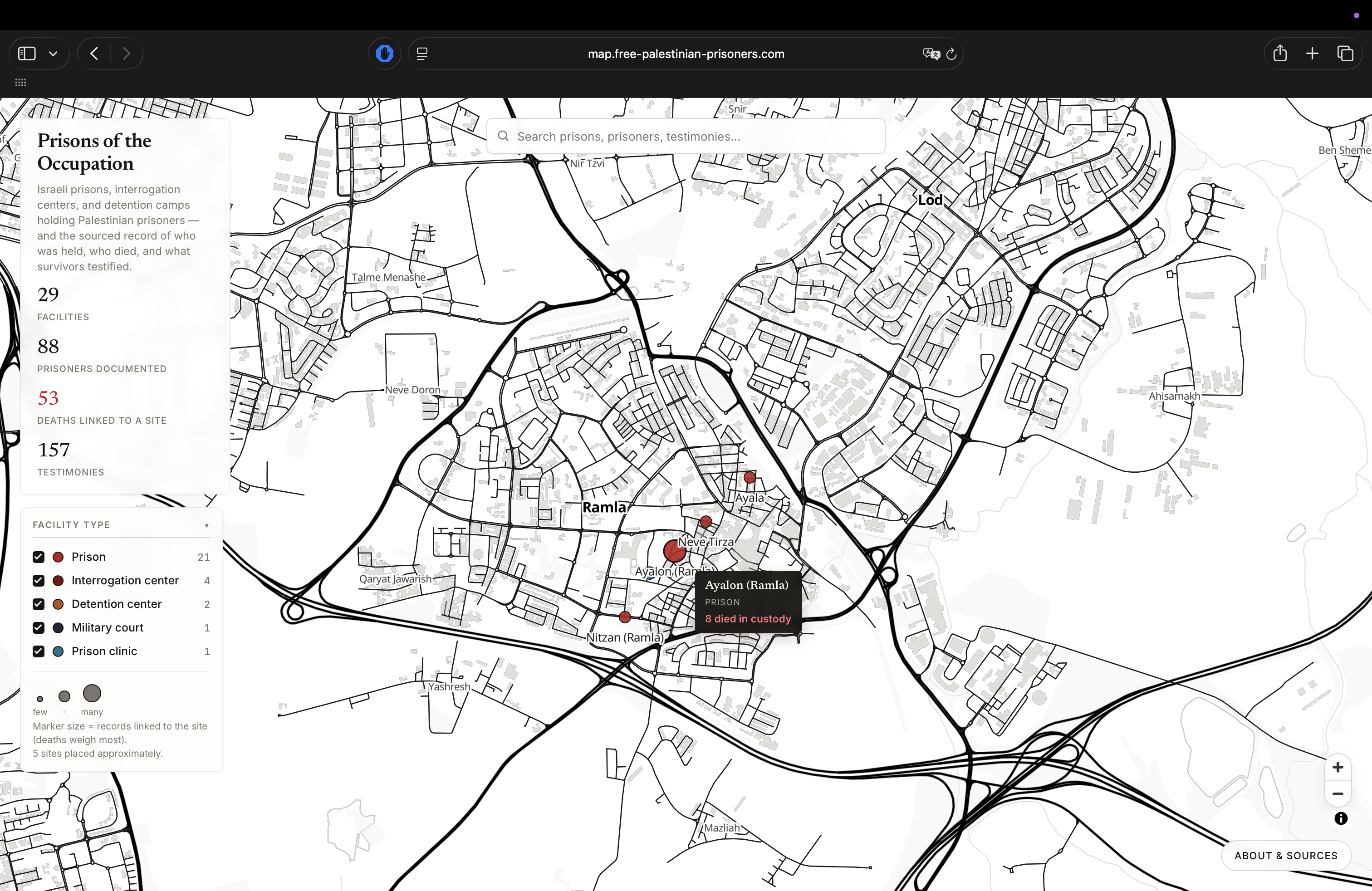
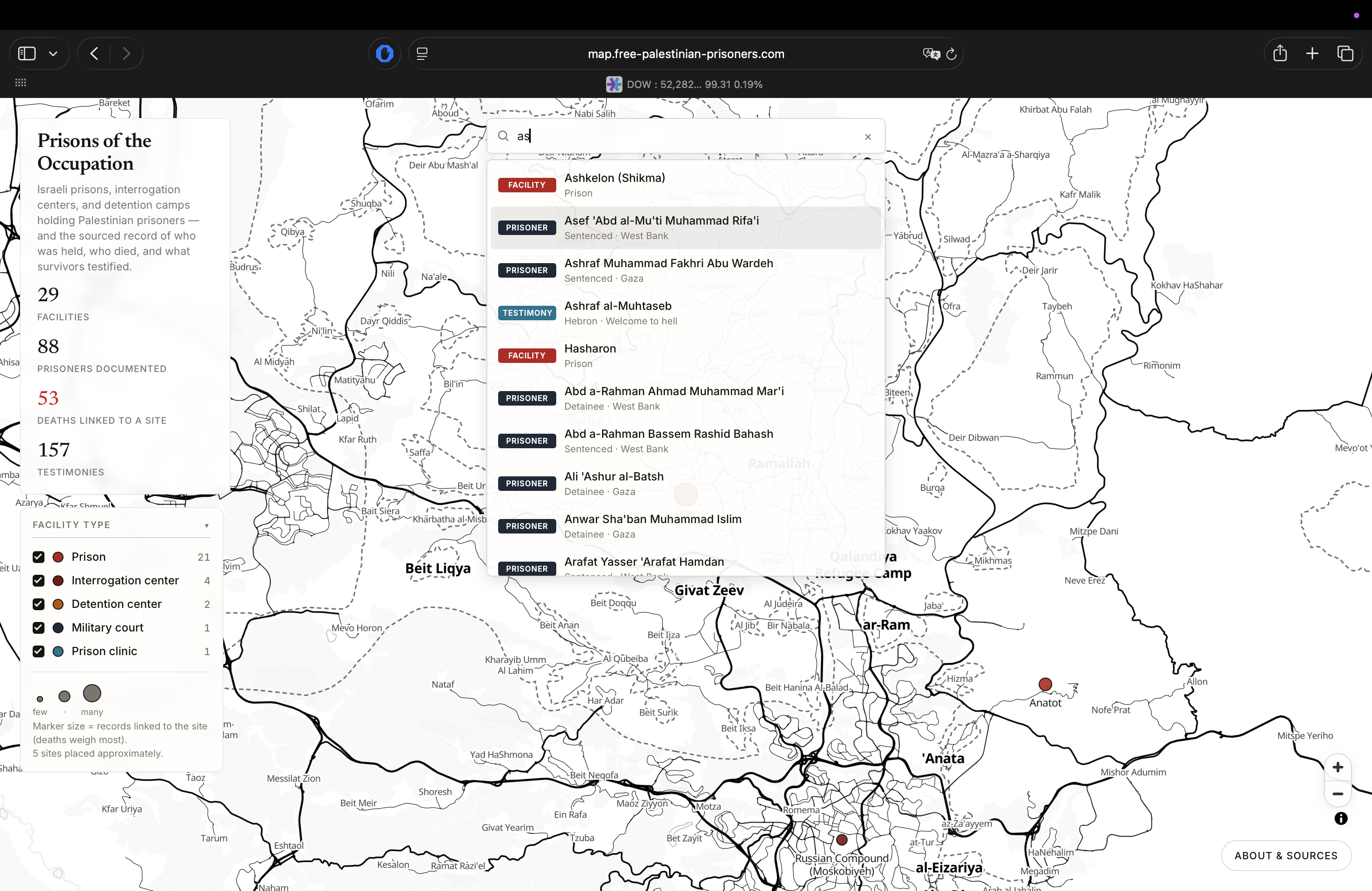
On the map, every facility is a point you can open. Click one and you see who is held or died there and the testimonies that describe it — each with the sources behind it. The same data powers search across people, places, and accounts.
All of it is open data. The records that drive the site are published for download as JSON and CSV, with a documented schema and an open license, so researchers, journalists, and other campaigns can build on the work. The API documentation describes every field and how to access the data. The databases are updated periodically and the changes flow through to the map and downloads automatically.
Inside the map
A few views of the live map. Open it in full →